- Published on
Invoice Financing- How It Works

Accounts receivable financing may help bridge that gap. It can give you access to cash tied up in eligible unpaid invoices, instead of making you wait for the customer’s regular payment date.
Want to compare this with other funding options? Call 1-800-203-2176 or 1-480-863-0531, or email support@broadreachfinancial.com. Broad Reach is a funding advisor, not a lender. We help you explore options from multiple funding sources.
How accounts receivable financing works
The basic process is straightforward:
- You submit eligible invoices. A funding partner reviews the invoices and may check your customer’s payment history, creditworthiness, and any disputes or deductions.
- The partner advances part of the invoice amount. The percentage depends on the partner, customer, industry, and invoice details.
- Your customer pays. Depending on the arrangement, the customer may pay the funding partner directly or send payment to a designated account.
- You receive the remainder, less the agreed fee. Once payment clears, the partner releases the reserve after deducting its charges.
For example, if an eligible invoice is $50,000, a funding partner might advance 80%, or $40,000, and hold the rest as a reserve. When your customer pays, the partner deducts the agreed fee and returns the remaining reserve to you. That’s an illustration only; actual advances, fees, and timing vary.
This type of financing is sometimes described as invoice factoring. In factoring, a business sells or assigns eligible receivables to a factor at a discount. The IRS overview of receivables factoring describes the general structure. The details depend on the contract.
It may provide cash without a conventional term loan, but don’t assume it always means “no debt on the balance sheet.” Whether a transaction is treated as a sale or borrowing can depend on its terms and accounting rules. Ask your accountant how to record a specific agreement.

Who may benefit?
Accounts receivable financing may be worth exploring if your business invoices creditworthy commercial customers but cash is tight while you wait to be paid.
It may fit:
- Contractors waiting on payment for completed jobs.
- Trucking and transportation companies covering fuel, maintenance, or payroll between customer payments.
- Staffing firms paying workers before clients settle invoices.
- Wholesalers replenishing inventory while waiting on buyer terms.
- Auto shops billing commercial fleets or business accounts.
- Restaurants and caterers invoicing corporate accounts, event venues, or regular business customers.
- Professional service firms waiting on business clients to pay for completed work.
The key is that a real, valid invoice exists for work or goods already provided, and the customer is expected to pay. This is not a fix for invoices owed by customers who won’t pay. A funding partner may decline invoices that are disputed, ineligible, past due beyond its limits, or subject to deductions.
Not sure whether your receivables would qualify? Call 1-800-203-2176 or 1-480-863-0531. We’ll review the invoices and alternatives side by side before you commit to anything.
What to check before you sign
Compare the total cost
Invoice factoring fees may be based on the invoice amount, how long it takes your customer to pay, or both. An advance rate isn't the same as the fee, and the headline fee may not include every charge.
Ask for the full dollar cost, including any setup, transfer, minimum-volume, account, or early-termination fees. Compare it with a working capital loan or business line of credit. A loan or line may cost less for your situation, but approval, payment structure, and availability will depend on the lender and your qualifications.
The International Factoring Association’s overview is a useful starting point for understanding the process and questions to ask.
Understand customer notification and payment
Some arrangements notify your customer that the invoice has been assigned and direct them to pay the funding partner or a lockbox. Others may offer different payment arrangements, depending on the provider and agreement.
Ask what your customer will be told, where to send payment, what happens if they accidentally pay you, and how quickly payments are reconciled. Make sure your customer understands the payment instructions. A missed or misdirected payment can create complications.
Ask about recourse and dilution
With recourse arrangements, you may have to buy back or replace an invoice if it isn’t paid under the contract’s terms. “Non-recourse” does not necessarily mean every type of nonpayment is covered; ask exactly which events qualify and which remain your responsibility.
Also ask how the partner handles dilution: reductions in an invoice amount due to returns, discounts, credit memos, disputes, or short payments. These adjustments may reduce the amount available to you or change the reserve.
Where it fits among other funding choices
Invoice funding is one tool, not automatically the best first move.
First: 0% Business Credit Card Stacking. If you can qualify and have a sensible repayment plan, introductory 0% business credit cards may be a first-line option for eligible expenses. Offers and terms vary, and promotional periods end. Read our guide to 0% credit card stacking before applying.
Working capital loans may suit a defined cash need with scheduled repayments. Business lines of credit may offer reusable access to funds for recurring gaps. Merchant cash advances may provide another route for some businesses, but frequent repayments and total cost deserve close attention. Compare the actual dollars and payment schedule, not just how quickly funding may be available.

Let’s look at the whole picture
Broad Reach Financial Services has 30 years of experience and works with businesses in all 50 states. You can pre-qualify in about two minutes with a soft credit pull that won’t affect your credit score. We generally recommend a FICO score of 650 or higher for our financing services, though eligibility depends on the funding option and provider. Some options may close in as little as 48 hours, depending on the product and lender.
Steve started a car dealership in 1984, later built Western All Tool, and has arranged tens of thousands of loans. He’s also crossed the Atlantic twice aboard a catamaran. If credit issues are making financing harder, we can connect you with a specialist attorney for a review.
Let Steve and Gale put their 30-plus years of business ownership and loan processing to work for you. Steve built and sold his own companies. Gale has processed loans for decades. They've sat on your side of the desk, and they'll talk you through your options.
Call 1-800-203-2176 or 1-480-863-0531, or email support@broadreachfinancial.com. We’ll help you understand the trade-offs and decide which funding route best fits your business.
Broad Reach Financial Services Inc. is a funding advisor, not a lender. We have 30 years of experience and work with businesses in all 50 states, comparing options from multiple funding sources. Pre-qualification may take about two minutes and uses a soft credit pull that does not damage your credit rating. Approval, terms, fees, eligibility, and funding times vary; no outcome is guaranteed. Call 1-800-203-2176 or 1-480-863-0531, or email support@broadreachfinancial.com.
- Published on
How Phoenix-Area Contractors and Trades Can Fund Equipment and Growth Without Draining Cash Flow

If you run an HVAC, plumbing, electrical, roofing, landscaping, auto shop, or trucking business around Phoenix, a busy season can still strain cash flow. You may need trucks, tools, materials, or extra crew capacity before customers pay.
You can pre-qualify for financing in about two minutes with a soft credit pull that won’t affect your credit score. Call 800-203-2176 or email support@broadreachfinancial.com to talk through your options. Depending on the product and lender, some financing may close in as little as 48 hours.
Start with 0% business credit cards
For a planned, short-term business expense, stacking 0% business credit cards may be a useful first option. It means applying for multiple business cards as part of a deliberate funding plan, not firing off applications one after another. Some cards offer introductory periods of up to 18 months at 0%, depending on approval and the card’s terms.
That time can help you cover eligible business purchases while keeping cash available for payroll, fuel, and materials. But the promotional period ends. Make a realistic repayment plan before you apply, and check whether applications involve hard inquiries or personal guarantees. Read our guide to using 0% business card stacking carefully.
A FICO score of 650 or higher is generally recommended for our financing services. Eligibility and approvals depend on the applicant, lender, and product.
Match the funding to the need

Equipment leasing for trucks, tools, and machinery
When you need a service vehicle, diagnostic tools, a trailer, mower, or shop equipment, equipment leasing may help you acquire the asset without paying the full cost up front. Many leases include a $1 purchase option at the end, which may let you own the equipment after you finish paying. Check the agreement: terms, fees, purchase options, and eligibility vary.
A useful question to ask: will the equipment generate enough work or revenue to support its payments, including during slower periods?
Business line of credit for changing expenses
A business line of credit may fit recurring needs like materials, fuel, payroll, repairs, or bridging the time between a job and payment. You draw what you need, subject to the line's terms, rather than taking a lump sum. Depending on qualifications and lender, business lines may be available for up to $3 million.
Compare rates, fees, repayment terms, and draw frequency. Our guide explains business line-of-credit options.
Business term loan for a defined project
A term loan provides a lump sum with scheduled repayments. It may make sense for a planned expansion, a major equipment purchase, or a shop renovation when you know how much you need and can manage the payment over time.
A term loan may also help you pay down high-interest credit card balances. Lowering revolving balances can reduce credit utilization and may improve your credit profile, but it doesn’t guarantee improvement. Compare the loan’s total cost and payment with your current obligations, and avoid running the card balances back up. Keep payments current, review your credit reports for errors, and address any inaccuracies before applying.
Merchant cash advance for an urgent cash-flow gap
A merchant cash advance may provide faster access to funds based largely on business cash flow. It can be an option to explore when a time-sensitive expense can’t wait, but repayment may come frequently, and the overall cost can be high. Carefully review the total payback amount and payment schedule. Make sure the payments won’t squeeze the cash you need to keep crews and jobs moving.
Accounts receivable financing when invoices are outstanding
If you’re waiting on customer or commercial-account payments, accounts receivable financing may let you access funds tied to eligible outstanding invoices. It may help bridge the gap between finishing work and collecting payment. Advance amounts, fees, and whether the arrangement is with or without recourse vary, so understand the agreement before proceeding.
Plan around Phoenix’s work cycle

Phoenix businesses don’t all experience the same seasonal rhythm. Summer heat can drive HVAC calls while making outdoor work more difficult to schedule. Roofing and landscaping work can also shift with weather and job timing. Even when work is steady, invoice timing may not be.
Before taking on financing, map out expected expenses and incoming payments for a few months. Include payroll, fuel, materials, insurance, repairs, and any slower stretches. Then match the funding to the need: equipment financing for a long-lived asset, a line of credit for recurring working capital, or a term loan for a defined project.
Call 800-203-2176 or email support@broadreachfinancial.com. We’ll help you explore what may fit. Financing is available across all 50 states, not just Arizona. If you’re also looking at government-backed options, review the official SBA 7(a) loan program.
Talk it through before you commit
Steve’s business story began in 1984 with a car dealership. He later built Western All Tool Equipment Company and arranged tens of thousands of loans for customers. After selling his company, he bought a catamaran and crossed the Atlantic twice. He understands what it means to run a business, make a major decision, and keep moving when the numbers need a closer look.
Let Steve and Gale put their 30-plus years of business ownership and loan processing to work for you. Steve built and sold his own companies. Gale has processed loans for decades. They’ve sat on your side of the desk, and they’ll talk you through your options.
Start with a soft-pull pre-qualification in about two minutes. Call 800-203-2176 or email support@broadreachfinancial.com. Some financing may close in as little as 48 hours, depending on the product and lender.
Broad Reach Financial Services Inc. is a financing advisor, not a lender. We bring 30 years of experience helping businesses in all 50 states understand and compare financing options. Pre-qualification uses a soft credit pull that does not affect your credit score. Approval, rates, terms, eligibility, and funding times vary by lender and product. Call 800-203-2176 or email support@broadreachfinancial.com.
- Published on
"Ghost Money": How an Unregulated Bank Built a 100% Profit Margin
Updates| American Dream & Funding| Business Funding Strategies| The Funding Machine| Entrepreneurial Mindset| Entrepreneurship| Business Growth & Scaling| Business & Personal Credit| Industry Insights & Trends
October 01, 2026•9 min read
How an unregulated bank built a 100% profit margin - and the blueprint to fund your own machine
The Unregulated Bank On Every Corner
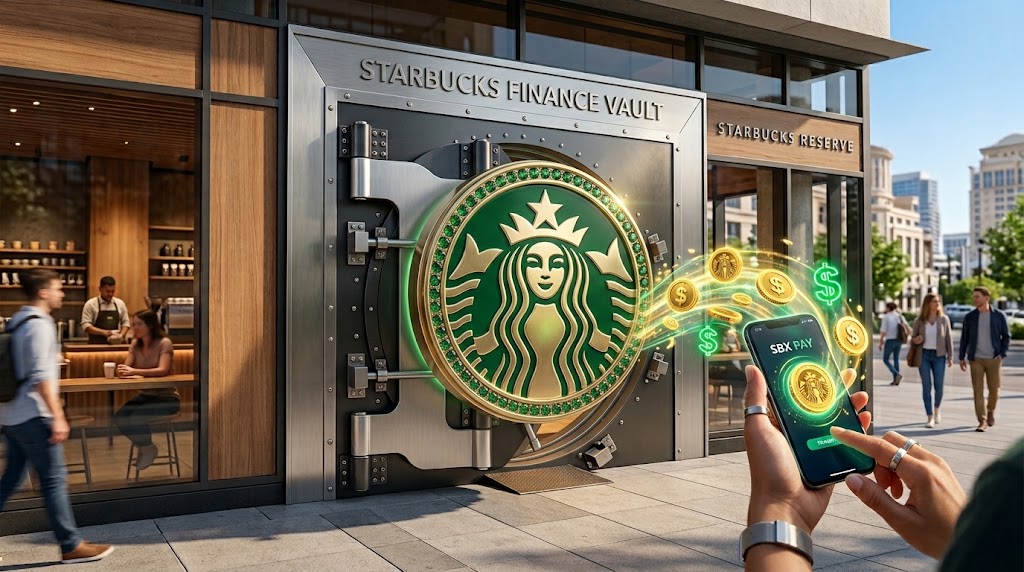
You probably think Starbucks is a coffee company. It isn't. Behind the green aprons and overpriced seasonal lattes, Starbucks actually operates as a highly sophisticated non-bank financial institution. For proof, look at their fiscal year 2025 balance sheet. They held a massive $1.84 billion liability in what they call "stored value."
What's stored value? It's cash sitting on gift cards and preloaded in the mobile app. When a customer deposits fifty bucks to earn a few digital stars, they aren't just buying future coffee. They're handing a multinational conglomerate an unsecured, 0% interest loan. (I don't even drink the stuff, but I watch people wait in the drive-thru every morning thinking they're beating the system with free rewards — completely missing the fact that they're actively funding a corporate empire for free).
 The scale of this operation is wild. Right now, 35.5 million active users treat the Starbucks app like a primary digital wallet. Those loyalists drive over $13 billion in annual spend and generate roughly 60% of all company-operated revenue in the U.S. Consumers trade cold, hard cash for zero interest and a digital pat on the head, and the corporation takes that cash to build its global footprint. They aren't just making drinks, ok? They're leveraging the public's money to win. It's time to wake up, stop giving away your capital, and see the game for what it is.
Dodging Wall Street and Cheating Visa
If a normal corporation needs to raise almost $2 billion to fund its operations, it has to go beg Wall Street. Let's do the brutal math. If Starbucks raised that $1.84 billion in the traditional corporate bond market at a standard 5.5% interest rate, it would cost roughly $101.2 million in pure interest expense every year. That's a massive hit to the bottom line.
Instead, they just let millions of people willingly load up the mobile app. By using those retail deposits instead of traditional debt, they manufacture over $100 million in shadow yield annually. They get the growth capital they need, and customers happily pay the inflation tax.
Think about how a real bank works. A commercial bank has to pay you a yield to hold your money, and when you want it back, it has to hand you actual cash. Starbucks pays 0% interest. Instead of paying you a yield, they toss out digital "Stars" that cost them absolutely nothing to mint. And the absolute best part is, when it's time to finally settle that massive $1.84 billion debt, they don't give you your cash back. Instead, they hand you a physical cup of coffee that costs them pennies to produce. It's the ultimate settlement cheat code.
But it gets even better. Every time you swipe a debit or credit card at a local business, the big networks like Visa and Mastercard take a massive cut. It's usually a percentage plus a heavy fixed swipe fee. If a customer buys a five-dollar coffee ten times a week, those fixed fees add up and can completely destroy profit margins. Starbucks solved this by building a closed-loop system.
By forcing people to preload funds in $50 batches, Starbucks pays the credit card interchange fee only once. Then you make your ten individual purchases entirely within its ecosystem. This one hack completely bypasses the Visa and Mastercard cartel and saves the company tens of millions of dollars annually. I love watching massive corporations legally dodge credit card fees while the rest of us get nickel and dimed to death. You really have to respect the hustle.
 This isn't just a clever loyalty program. This is the exact same wealth-building strategy Warren Buffett uses to run Berkshire Hathaway. Buffett built his entire empire on "insurance float" — collecting cash premiums upfront, investing them for massive returns, and paying out claims way down the road. Starbucks is just doing the retail version of it. They get the cash today and hand you a drink next month. It's a top-tier billionaire strategy hiding right in plain sight. If you want to build wealth, stop playing the consumer's game and start engineering your own float. Own your structure, protect your margins, and act like the house.
The Breakage Glitch: $222 Million in Ghost Money
The absolute best part of this whole setup is the ghost money. In finance, they call it "breakage." It's just the cash sitting on lost gift cards and abandoned digital accounts. Think about it. The customer pays upfront, but Starbucks never has to grind a single bean, pour a drink, or pay a barista. Because no product or labor is ever delivered, that cash drops straight to the bottom line at a 100% profit margin.
This isn't just pocket change, ok? In fiscal 2025 alone, Starbucks legally recognized a staggering $222.4 million in pure breakage revenue. It's the ultimate free money glitch.
 Of course, that kind of cash grabs attention. Labor unions are actively throwing a fit. They claim Starbucks uses this massive flood of ghost money to quietly absorb hundreds of millions in operational costs and anti-union legal fees without shareholders even noticing. And if you're going to fight expensive corporate battles, it helps when the public accidentally pays your legal bills.
You might be wondering why the government doesn't step in and take that abandoned cash. States have "escheatment" laws designed to claim forgotten property. But Starbucks built a brilliant legal moat. Because their retail gift cards don't have expiration dates or dormancy fees, the funds technically never expire. That shields the money from state treasuries—and lets the corporation legally sweep it into its own profit columns.
The game is rigged to reward the house. If you want to win, stop leaving your money on the table for someone else to sweep up. Take accountability for your capital and start building a system that pays you instead.
Engineering Your Own 0% Float
A massive mental gap separates an employee from an owner. The standard consumer operates completely backward. You voluntarily lend your money to a giant conglomerate at 0% interest while you eat all the inflation risk. The real equity-holding owner does the exact opposite. They aggressively take 0% loans to buy cash-generating assets and generate a real return. If the big guys refuse to use their own cash to grow, why are you draining your personal savings to fund your business? You need leverage. You need a system that brings capital in the door before you actually do the hard work. It's the only way to scale without burning yourself out.
You can build the exact same setup right now. For a small business, the direct equivalent of the app float is credit card stacking. Instead of begging a traditional bank for a slow loan, you strategically sequence the acquisition of three to five distinct credit cards. But you don't just grab any random card online. You target high-tier accounts specifically offering a 0% introductory rate.
If you do it right, you aggregate a massive revolving credit facility of $50,000 to $150,000. You hold that money at absolutely 0% interest for 12 to 15 months. You use it to buy inventory, run marketing campaigns, or scale operations. The profit stays in your pocket, and the interest costs you absolutely nothing. You're playing the game with other people's money.
 But you can't just log online and randomly hit apply. The banks run on a strict algorithmic rulebook. First, you need a pristine personal credit score of 680 or higher to act as your anchor. If your personal file is a mess, the institutional vault stays locked. Next, sequence your applications carefully to beat automated underwriting rules. Lenders like Chase have strict policies that will auto-deny you if you open too many accounts too fast.
You also have to hit different credit bureaus at the exact right times to avoid triggering bust-out fraud alerts. (I've seen too many smart business owners completely destroy their credit in a single afternoon because they thought they could outsmart a billion-dollar banking algorithm). The sequence matters just as much as the score.
Once you secure the initial capital, you start playing the long game. Over time, you shift the debt away from your personal guarantees. You establish a commercial credit profile linked directly to your Employer Identification Number. A mature EIN profile eventually lets you secure massive non-recourse term loans without ever risking your personal assets. You borrow their money, build your business, and keep your family's house off the line. This is how real players scale. They protect their downside while using outside capital to multiply their upside.
 That's why Broad Reach Financial exists. We analyze your unique credit architecture and structure the application sequences for you and/or your clients. We know exactly how to maximize your limits across 100+ lenders without detonating your personal credit file. You don't have to guess which banks to hit or what order to apply in. We handle the friction so you can focus on actually running the business.
You deserve to win, but nobody will hand you a blank check just because you have a good work ethic, ok? Take radical accountability for your cash flow, stop using your own money to grow — and build a machine that works for you instead of against you
Radical Accountability & The Sweat Equity Play
Look… as I mentioned, I don't even drink it, but I get why people want a morning caffeine hit. The problem isn't the coffee. The problem is participating blindly in someone else's wealth machine while your own business starves for capital. Staying broke while funding a corporate expansion is a choice. You need to take radical accountability for your earning structure right now.
Stop playing the depositor handing out free loans, and start acting like the bank. I spent too long building other people's dreams before I realized I was the only one holding my own business back; you have to flip the script! If you're ready to secure real capital and build your own float, go check out Broad Reach Financial Services Inc. right now. The blueprint is sitting right in front of you. Plug in, take ownership, and get to work.
(Reposted from 7 Figures Funding)
- Published on
Interest Rates Are Up. Your Growth Plans Don't Have to Stall.

Borrowing costs are a concern. But a higher-rate environment doesn’t automatically mean you should put your plans on hold. Owners are still preparing to hire, build inventory, and pursue new sales. The key is to choose financing deliberately, not wait indefinitely for rates to fall or take the first offer that comes along.
Broad Reach Financial Services helps you compare business funding options and understand how they may fit your goals. We’re a funding advisor, not a lender. Call or text 800-203-2176 or 480-863-0531, or email support@broadreachfinancial.com, to talk through your next step.
The rate picture: higher costs, but growth plans remain
The Fed’s September hike continues to work through the market. The federal funds rate stands at 3.75%–4.00%, and Prime is 7.00%. Markets expect the Fed to hold steady at its October 27–28 meeting, but another hike before year-end remains possible.
That matters if you use borrowing with a variable rate. Many business credit cards have variable APRs, and some credit products are tied to Prime. When rates rise, the cost of carrying a balance can rise too. The actual effect depends on your account terms and lender.
Business confidence has softened, but it hasn’t fallen off a cliff. The NFIB Small Business Optimism Index slipped to 97.9 in September, just below its 52-year average. Inflation is the top concern for 20% of owners, and a net 8% paid higher rates on their latest loan. The highest reading since June 2025. (NFIB’s September report)
At the same time, a net 9% expect higher real sales next quarter, inventory plans reached their highest level since December 2024, and 17% more owners plan to hire than cut jobs. That’s the tension: borrowing costs deserve attention, but opportunity doesn’t always wait for a perfect rate environment.

Let us help you start with the job the money needs to do
The first thing we do with every client is get clear on the purpose of the financing. Inventory, a new location, equipment, an uneven cash-flow cycle, a long-term property purchase — the right structure depends on what you’re funding, how quickly you need the money, and how repayment fits your cash flow.
Then we do the comparison work for you: payment, term, fees, rate type, collateral requirements, and what happens when an introductory offer ends. A lower initial cost may not be the best fit if the repayment schedule strains your business later, and we spot that before you sign, not after.
For a quick conversation about your options, call 800-203-2176 or 480-863-0531. We’ll help you understand what may fit and what questions to ask before you commit.
When 0% business cards may fit
When the fit is right, 0% business credit card stacking can be a practical first option for eligible owners. Depending on the card and approval terms, an introductory period may offer 0% for up to 18 months. In a 7% Prime environment, that can be useful financing for planned business expenses.
The offer has an end date. After the introductory period, the card’s regular APR applies, and it’s usually variable and higher than 0%. So at Broad Reach Financial, we can help you explore moving any unpaid balance to a term loan before the high interest rate kicks in. A clear strategy keeps your credit profile and available credit in good shape.
For a closer look at how to approach applications thoughtfully, read our guide to 0% credit card stacking.
When a fixed-rate term loan may make more sense
If you need a defined amount and want predictable payments, a fixed-rate business term loan may be worth comparing. A fixed rate locks the interest rate and payment schedule for the life of the loan, subject to the loan agreement. That predictability can be valuable when variable borrowing costs are rising.
A term loan may also help some business owners pay down higher-rate revolving card balances. As card balances fall, credit utilization may improve, which may support a healthier credit profile. Results vary, and the loan is not debt disappearing. It’s a different repayment structure. Keep making required card payments until the payoff has posted to the accounts, and compare the loan’s total costs and term before deciding.
Need help comparing an SBA loan and a standard term loan? See our overview of SBA loans versus business term loans.

SBA costs: check the details before you apply
For qualifying 7(a) loans of $700,000 or less, an upfront guaranty fee of 0% took effect October 1 for manufacturers, specified food supply chain businesses, and rural businesses. For businesses in those categories, this may represent a real cost saving. The waiver applies only when the loan and applicant meet program rules; it isn’t a blanket fee change for every 7(a) borrower. The SBA’s 7(a) loan program includes financing for eligible working capital, real estate, equipment, and other business needs.
For qualifying long-term real estate and equipment projects, the 25-year SBA 504 rate climbed to 6.97%, up from 6.54% in September. If you’re planning a property purchase or major equipment investment, run the numbers using current terms rather than assuming waiting will make financing cheaper. The quoted rate is only one part of the decision; eligibility, fees, project structure, and lender terms matter too.
When flexibility or speed matters more
Not every funding need calls for a lump sum. A business line of credit can help manage recurring working-capital needs, while accounts receivable financing may help when outstanding invoices affect cash flow. A merchant cash advance may help with an urgent cash-flow need, but you should understand the full repayment cost and how payments may affect daily operations.
If you’re exploring alternatives, take care of the basics alongside your funding search: check your credit reports for errors, make payments on time, and avoid applying for multiple products without a plan. We generally recommend applicants with a 650 FICO score or higher, but that’s a recommendation, not a cutoff. Eligibility and terms depend on the lender, product, applicant, and business circumstances.
Compare options before you put growth on hold
Let Steve and Gale put their 30-plus years of business ownership and loan processing to work for you. Steve built and sold his own companies. Gale has processed loans for decades. They've sat on your side of the desk, and they'll talk you through your options.
Rates may be higher. That makes a careful comparison more important, not growth impossible. Call or text 800-203-2176 or 480-863-0531, or email support@broadreachfinancial.com. We’ll help you review your options and decide what makes sense for your business.
Other lenders fit you into their program. We fit the program to you.
Broad Reach Financial Services Inc. is not a lender; we provide education and guidance and connect clients with funding sources. Approval, rates, terms, fees, eligibility, collateral requirements, and funding times vary by lender, product, applicant, and business circumstances; no outcome is guaranteed. This article is general educational information and not legal, tax or financial advice.
- Published on
Why not use a term loan to pay down your credit card balances

If your business is carrying credit card balances, you may be wondering whether a term loan could make repayment easier. The idea is straightforward: replace revolving card debt with one scheduled loan payment and a clear payoff date.
That can help in the right situation, but a loan doesn’t erase debt, and it isn’t automatically cheaper. Before you decide, compare how interest works, what the loan really costs, and whether its payment fits your cash flow. Call 800-203-2176 or 480-863-0531, or email support@broadreachfinancial.com to talk through possible options.
Why the kind of interest matters
The short version: a credit card compounds against you daily, and a term loan charges simple interest on what you still owe, on a schedule that ends. Understanding that difference is why this comparison is worth five minutes of your time, because it changes what carrying a balance actually costs you.
Credit card interest and loan interest work differently
A credit card’s APR is an annual rate, but many issuers calculate interest using a daily periodic rate, often the APR divided by 365, though the card agreement explains the method. The issuer applies that rate to your balance each day. If interest is added to the balance, the issuer can calculate subsequent interest on that larger amount. That’s compounding.
Many card APRs are variable, too. If the rate changes, your borrowing cost may change with it. And because minimum payments can be relatively small, a large share of what you pay may go toward interest rather than reducing the balance. For example, a $5,000 balance at 24% APR can take many years to pay off if you make only minimum payments. New purchases can make the climb steeper.
A fixed-rate, fully amortizing term loan usually works differently. Each scheduled payment covers interest on the remaining principal and pays down some of that principal. As the balance shrinks, the interest portion generally shrinks too. You can review the payment schedule, term, and expected total repayment before you sign.
The simple difference: On a term loan, interest is charged on what you still owe, and the balance follows a repayment schedule. On a credit card, interest may compound on a revolving balance, with no built-in payoff date if you keep making only minimum payments.
The Consumer Financial Protection Bureau explains how credit card issuers calculate interest. Check your own card agreement for its specific terms.
See the difference at a glance
The image at the top of this article is a simplified illustration, not a prediction or quote. Actual interest and repayment depend on your card agreement, loan terms, payments, and other factors.
When might a term loan make sense?
A business term loan may be worth considering if you’re carrying expensive card balances long term, prefer a set repayment schedule, and can manage the payments. It could replace several revolving balances with one structured obligation. Whether that lowers your cost depends on the complete loan terms, not just the advertised rate.
Compare the loan’s APR, fees, payment amount, number of payments, and total repayment with the cost of continuing to pay down your cards. A loan APR may reflect certain fees, such as origination charges, but you should still review all fees and the total amount you’ll repay. A card’s APR generally doesn’t include charges such as annual or late fees. Those costs can affect the real price of carrying a balance.
A lower monthly payment isn’t automatically a better deal. A longer term may reduce the payment while increasing the total interest you pay. Ask for the payoff schedule and compare total dollars and payoff date.
- A term loan may offer: scheduled payments, a defined term, and a planned payoff date.
- A credit card may offer: flexible access to revolving credit, but a variable rate, compounding interest, and no set finish line if you pay only the minimum.
- Either option may cost more than expected: fees, repayment behavior, and the terms you’re offered matter.

The credit rating angle: paying down cards may improve your score
We tell customers this all the time: using a term loan to pay down credit card debt can really improve your credit rating.
Here is why. One of the biggest factors in your credit score is how much of your available revolving credit you use. Carrying balances close to your card limits raises utilization and can lower your scores. Pay those balances off, and your utilization drops, which may improve your credit rating, often within a month or two after card issuers report the lower balances.
A term loan may also help in another way: it replaces revolving debt with an installment loan with fixed payments. Showing an installment account paid on schedule can work in your favor over time.
Two honest notes on what to expect. First, results vary: paying down balances may improve your scores, but no outcome is guaranteed, and the size of the change depends on your whole credit profile. Second, the improvement depends on the balances actually going down and staying down. If you fill the cards back up, the benefit goes with them. Used with a plan, though, the combination of paid-down cards, an installment loan, and restored available credit is exactly the setup many owners are working toward.
What paying off your cards does to your available credit
Something worth knowing before you consolidate: paying off your card balances doesn’t close the cards. Once the balances clear, that credit becomes available again, often with more room than before, since the loan moves the debt off the revolving side. Many owners use exactly that: lower utilization, an installment loan paid on schedule, and more available credit for whatever the business needs next.
Keep making at least the required payments on the cards until you’ve confirmed that any payoff has reached the card accounts.
If your balances come from a temporary business expense, a different financing structure may fit better. A business line of credit can offer revolving access for changing cash-flow needs; learn more in our guide to business line of credit options.
What about 0% business credit cards?
If you’re planning upcoming business expenses and can repay them within the promotional period, 0% business credit cards may be worth exploring first. Some offers provide an introductory 0% period, but the terms vary. The payoff plan matters: carrying a balance after the offer ends can get expensive quickly.
Our guide explains how to approach applications carefully for 0% credit card stacking. For many business owners, that is the first option we consider when the fit is right, because paying no interest during the promotional period beats paying any interest. If you already have a balance you expect to carry long-term, a term loan may be another option to compare, but it's not guaranteed to be a better deal.
We make the comparison for you
You don’t have to run this math alone, and you shouldn’t. Comparing card balances, APRs, fees, and minimum payments against a loan’s full terms is exactly the work we do every day, and the details that decide whether it’s a good deal are the ones that are easy to miss: what the payment does to your cash flow in a slow month, whether a longer term quietly raises your total cost, and which fees sit inside the APR and outside it.
Here’s what we do for you:
- We lay your card balances, rates, and payments next to the funding options and show you what each path really costs over its full life, not just the headline rate.
- We check whether a term loan payment fits your cash flow through a slow month, not just a good one.
- We compare options across commercial lenders, SBA resources, private investors, and other funding partners, so you’re seeing the market instead of one lender’s menu.
- We walk you through what may improve your credit rating along the way, because paying down revolving balances is one of the moves that can help, and it’s one we talk through with owners regularly.
Before you apply anywhere, pre-qualify with us. It takes about two minutes, uses a soft credit pull that won't damage your credit score, and carries no obligation. Financing services generally recommend applicants with a FICO score of 650 or higher. That’s a recommendation, not a cutoff or promise of approval; some cash-flow-based options may be available to business owners who don’t meet a FICO-based standard.
We serve businesses across all 50 states and bring 30 years of small-business financing experience. Depending on the product and lender, some options may close in as little as 48 hours.
Want us to run your numbers? Call or text 800-203-2176 or 480-863-0531, or email support@broadreachfinancial.com. We’ll compare options with you and talk through the trade-offs.
Let Steve and Gale put their 30-plus years of business ownership and loan processing to work for you. Steve built and sold his own companies. Gale has processed loans for decades. They've sat on your side of the desk, and they'll talk you through your options.
Call 800-203-2176 or 480-863-0531, or email support@broadreachfinancial.com. We’ll help you review your options without promising approval or a specific outcome.
Broad Reach Financial Services Inc. is not a lender; we provide education and guidance and connect clients with funding sources. We have 30 years of experience and serve businesses in all 50 states. Pre-qualification takes about two minutes and uses a soft credit pull that does not damage your credit rating; there is no obligation. Approval, rates, terms, fees, eligibility, collateral requirements, and funding times vary by lender, product, applicant, and business circumstances; no outcome is guaranteed. This article is general educational information and not legal, tax, or financial advice. Call 800-203-2176 or 480-863-0531, or email support@broadreachfinancial.com.
Other lenders fit you into their program. We fit the program to you.
- Published on
0% Credit Card Stacking: How Careless Applications Hurt Your Business Credit (and How to Do It Right)

You need working capital, so you start applying. One card. Then another. Then another after the first gets declined or offers a weak limit. That does not just fail to fix the problem. It can take away your options. By the time you realize the approach was scattergun, the doors you actually needed may already be tighter, slower, or closed.
The business may not be the problem. The approach is. Careless applications can make a lender nervous before they have even seen what your company does well. Before you put another inquiry on your file, call 800-203-2176 or email support@broadreachfinancial.com. We’ll help you slow down and consider the smart move first. Most often, that smart move is 0% business credit card stacking: a planned sequence of applications, in the right order, that can build a real pool of working capital without pledging collateral.
Let Steve and Gale put their 30-plus years of business ownership and loan processing to work for you. Steve built and sold his own companies. Gale has processed loans for decades. They've sat on your side of the desk, and they'll talk you through your options.
It’s not the applications. It’s applying without a plan.
A business credit card application often includes a review of the owner’s personal credit. That may mean a hard inquiry. One inquiry’s effect is usually limited, but several applications can add up and may influence how a lender views your recent credit-seeking.
A decline doesn’t usually show up as a separate “declined” mark on your credit report. But the inquiry from the application may remain. And if you respond to every setback by applying somewhere else, you create more inquiries without fixing the underlying issue. A string of declines can also teach the next lender to say no before they have read anything about the business.
Timing matters, too. Applying while balances are already high means you’re asking for credit when your file looks weakest. Spacing applications out over several months doesn’t erase that history. A lender may still consider recent inquiries, balances, and other factors together.
The result may be smaller limits, higher pricing, slower decisions, or fewer options when you need capital most. You may feel it for six to twelve months, right when the applications you really need come up. The inquiries fade, but the decisions they prompted can linger.
Make 0% business credit card stacking your first move, not your last resort. We put
0% business credit card stacking in front of most business owners when it fits.
Credit card stacking means coordinating applications for multiple business credit cards as one deliberate funding plan. It is the fastest way we know to build a real pool of working capital without pledging collateral or paying interest during the introductory period. Some cards may offer up to 18 months at 0%, depending on the card and approval terms.
The money goes straight to work on business expenses. It is not limited to balance transfers. Used responsibly, revolving credit can fund inventory, equipment, marketing, renovations, payroll timing, or bridge a gap with a slow-paying customer.
The sequencing is the product. Which cards, in what order, hitting which bureau, with the right pauses in between. That is the part most owners get wrong, and why the same strategy works for one owner and wrecks another's file. Issuer practices vary, and no sequence can guarantee approvals.
For many owners, this makes sense as a first line of funding and as an alternative when they’d rather not pledge collateral for a line of credit. We generally recommend applicants with a 650 FICO score or higher, but that is a recommendation, not a cutoff. It is still credit that must be repaid. Personal guarantees are common, and terms vary by card issuer.

Know the risks before you say yes
Your personal credit may be involved. Many business cards require a personal guarantee, which means you may be personally responsible for the debt if the business can’t pay. Serious delinquency or default may be reported to personal credit bureaus.
Routine reporting varies. Some issuers may report account balances and payments to personal bureaus, which can affect your personal utilization and score. Ask each issuer how it reports before applying; don’t assume “business card” means your personal file is untouched.
The 0% period ends. After the introductory period, the regular APR may be high. If you carry a balance beyond the promotional window, the cost can climb quickly. Build the payoff into your plan from the start, with a realistic repayment source and a calendar reminder for when the offer ends.
Stacking without a payoff plan can make the problem worse. Don’t apply to chase the largest possible limit. Choose a funding amount tied to a real business need, and avoid spending money you don’t have a reasonable path to repay.
A simple plan before you apply
- Set the amount and purpose. Know what the business needs and how you'll use the money.
- Review your credit first. Check balances, recent inquiries, and report errors before submitting another application. Our guide on raising your credit score covers practical ways to strengthen your profile.
- Compare terms and reporting. Ask about the personal guarantee, hard inquiry, personal and business credit reporting, intro period, fees, and ongoing APR.
- Map the payoff. Estimate monthly payments that could retire the balance before the 0% offer expires. If the numbers don’t work, pause.
- Apply deliberately. Consider the sequence and leave room to review each result before deciding what to do next.

Let’s make the next application a planned one
Broad Reach Financial Services Inc. helps business owners compare funding options and understand the trade-offs before moving forward. We’re a funding advisor, not a lender, and we don’t make approval decisions. We work with businesses in all 50 states and bring 30 years of small-business financing experience to the process.
Our initial pre-qualification takes about two minutes, uses a soft credit pull, and doesn't affect your credit score. There’s no obligation. That soft pull is separate from a card issuer’s application inquiry: submitting a card application may trigger a hard inquiry. Financing services generally recommend applicants with a FICO score of 650 or higher; that’s a recommendation, not a cutoff or guarantee. Some owners who don’t meet a FICO-based guideline may also qualify for cash-flow-based options. Depending on the product and lender, some options may close in as little as 48 hours.
If a bank has already turned you down, don’t assume every door is shut. Read what to consider after a bank loan denial, then talk with us about what may fit your business. Call 800-203-2176, 480-863-0531, or email support@broadreachfinancial.com.
Other lenders fit you into their program. We fit the program to you.
Broad Reach Financial Services Inc. is not a lender; we provide education and guidance and connect clients with funding sources. Approval, rates, terms, fees, eligibility, collateral requirements, and funding times vary by lender, product, applicant, and business circumstances; no outcome is guaranteed. This article is general educational information and not legal, tax, or financial advice.
- Published on
SBA Loans vs. Business Term Loans: Which One Actually Fits Your Business?

You have a defined need. Maybe it’s equipment, expansion, a new location, commercial real estate, or working capital.
Now you’re deciding between an SBA loan and a business term loan.
Here’s the part almost nobody explains clearly: an SBA 7(a) loan is a term loan. The real comparison is an SBA-guaranteed term loan versus a conventional, non-SBA business term loan.
Broad Reach Financial Services is a funding advisor, not a lender. We compare options across commercial lenders, SBA resources, private investors, and other funding partners — 30 years in, all 50 states.
Let Steve and Gale put their 30-plus years of business ownership and loan processing to work for you. Steve built and sold his own companies. Gale has processed loans for decades.
They’ve sat on your side of the desk, and they’ll talk you through your options.
Pre-qualify with a soft credit pull in about two minutes — no damage to your credit rating, no obligation. Call or text 800-203-2176 or email support@broadreachfinancial.com.
The Main Difference: Who Stands Behind the Loan?
An SBA 7(a) loan is issued by a participating lender. The SBA provides the lender with a government guarantee, subject to program rules.
A conventional business term loan does not carry that SBA guarantee.
Both can provide a lump sum that you repay through scheduled payments over a defined term. Both can help fund a specific business goal.
The guarantee can affect the cost, repayment period, documentation, underwriting process, and eligibility requirements. That is what you are really comparing.
SBA Loan: Lower Cost, Longer Paperwork
SBA loans may offer longer repayment periods and favorable fixed terms for qualified businesses.
The SBA 7(a) program can support:
- Working capital
- Equipment and machinery
- Commercial real estate
- Business expansion
- Renovations
- Business acquisition
- Certain debt refinancing
SBA 504 financing is generally designed for major fixed assets such as commercial real estate, construction, and long-term equipment. It is not a general-purpose working capital product.
The trade-off is paperwork. Expect detailed underwriting, business and personal financial information, tax returns, debt schedules, ownership documents, collateral review, and an explanation of how the money will be used.
A personal guarantee is commonly required. Lenders may also require collateral, depending on the loan size and circumstances.
SBA backing does not mean automatic approval. You still need to show the business can repay the loan, the funds fit the program, and you meet the ownership and eligibility rules.
An SBA loan may fit you if:
- You have time for a more detailed process.
- You want to explore a longer repayment period.
- Your business has documented cash flow.
- Your ownership structure meets current SBA rules.
- You are funding a substantial, long-term project.
Some SBA processes may take longer than other financing options. That can be frustrating when a project is already moving. If you want to know whether the structure may fit before spending weeks gathering documents, call us at 800-203-2176 or email support@broadreachfinancial.com.

Business Term Loan: Faster, More Flexible
A business term loan provides a lump sum that you repay on a set schedule over a defined period.
The loan may come from a bank, online lender, commercial finance company, or another funding partner. Because it is not structured around an SBA guarantee, the lender may use a different approval process.
A business term loan may be used for:
- Equipment
- Renovations
- Expansion
- A new location
- Marketing and staffing
- Inventory
- Working capital
- A major business purchase
Compared with SBA financing, some term loans require less documentation and may close faster. Depending on the product and lender, some financing options may close in as little as 48 hours.
That speed can come with a higher cost or shorter repayment period. You may also see different collateral, personal guarantee, payment, and prepayment requirements.
A conventional term loan may fit you if:
- Your funding need is clearly defined.
- You need to move faster.
- Your request does not fit SBA program rules.
- Your ownership structure does not meet current SBA requirements.
- You have a simpler financing need than the SBA process warrants.
- You want to compare non-SBA options after a bank rejection.
If you need a fixed amount for a specific project, a term loan may be easier to understand than a revolving line of credit. For ongoing or unpredictable expenses, however, a business line of credit may be a better fit for working capital.
Want to compare a faster term loan with SBA financing? Call or text 800-203-2176. We’ll help you understand what may be available before you decide.

Important SBA Changes in 2026
Potentially higher combined SBA financing
Under a policy effective July 4, 2026, eligible borrowers may access up to $5 million through 7(a) and up to $5 million through 504, for a potential combined total of $10 million in SBA-backed financing, up from $5 million.
That $10 million is a combined maximum, not an automatic approval amount. Eligibility, repayment ability, collateral, project structure, lender requirements, and SBA rules still apply.
New ownership requirements
Beginning March 1, 2026, 7(a) and 504 applicants generally must be 100% owned, directly and indirectly, by U.S. citizens or U.S. nationals whose principal residence is in the United States, its territories, or possessions.
Under the updated policy, lawful permanent residents are no longer eligible to own an interest in an applicant Company. Review ownership carefully before assuming SBA financing is available.
The 7(a) Small Loan threshold changed
The 7(a) Small Loan threshold dropped from $500,000 to $350,000. This changes the underwriting treatment and documentation that may apply to larger requests.
The change does not mean every request above $350,000 is ineligible. It means the lender may process the request under a different SBA underwriting category.
Who Qualifies: The Rules That Trip People Up
The 2026 changes get the headlines, but these requirements trip people up in practice.
- For-profit, U.S.-based operating business. The business must operate in the United States, meet SBA size standards for its industry, and be organized in the U.S.
- Credit elsewhere. SBA financing is for businesses that can't get credit on reasonable terms from other sources. A bank "no" does not disqualify you — in some ways it is the point of the program.
- Personal guarantee. Every owner of 20 percent or more generally must sign an unconditional personal guarantee.
- Collateral is not always required. Loans of $50,000 or less do not require collateral. Above that, the lender follows its own policies for similarly sized non-SBA loans.
- Equity injection for startups and acquisitions. Startups and business acquisitions generally require a 10 percent equity injection.
- No SBA minimum credit score. The SBA does not set one. But most SBA lenders set their own floor, often in the 640 to 680 FICO range, close to the 650 FICO we generally recommend.
Rules and lender policies change, and each lender applies its own standards on top of the SBA's. Call or text 800-203-2176 or email support@broadreachfinancial.com, and we will tell you where you stand before you spend weeks gathering documents.
SBA Loans vs. Business Term Loans: At a Glance
- Cost structure: SBA loans may offer more favorable pricing for qualified borrowers. Conventional term loans may cost more, especially when they provide faster or more flexible approval.
- Repayment shape: Both are generally lump-sum loans repaid through scheduled payments. SBA loans may offer longer terms, depending on the program and how the funds are used.
- Funding speed: Conventional term loans may close faster. Some options may close in as little as 48 hours, depending on the lender and product. SBA financing often takes longer.
- Documentation: SBA loans usually require more detailed financial, ownership, tax, and collateral documentation. Non-SBA term loans may require less, but requirements vary.
- Collateral: Either option may require collateral or a personal guarantee. The exact requirement depends on the lender, loan size, and business profile.
- Credit requirements: Financing services generally recommend applicants with a FICO score of 650 or higher. That is a recommendation, not a guarantee. Some cash-flow-based options may exist for owners who do not meet a FICO-based standard.
- Eligibility rules: SBA loans must follow SBA program rules, including current ownership requirements. Conventional term loans follow the selected lender’s rules.
- Best fit: SBA financing may fit a larger, long-term project when you have time. A business term loan may fit a defined need when speed or flexibility matters more.
Which One Fits Your Business?
Choose an SBA loan if you have time, want to explore a longer repayment period and potentially lower cost, have documented repayment ability, and your ownership structure meets current SBA rules.
Choose a conventional business term loan if you need to move faster, want a simpler process, don't meet current SBA citizenship or ownership requirements, or have a defined project that doesn't justify extensive SBA documentation.
And if a bank already said no, that may not be the end of the road. A lender’s decision reflects its own rules. After a bank rejection, you can explore other small business funding options

Let’s Compare Your Options
SBA loans and business term loans can both help fund a defined business need. The better choice depends on your timing, cash flow, ownership, documentation, credit profile, collateral, and the project itself.
Call or text 800-203-2176 or email support@broadreachfinancial.com. The soft-pull pre-qualification takes about two minutes, doesn't affect your credit rating, and has no obligation. We’ll help you understand what you may qualify for and connect you with potential funding sources.
Other lenders fit you into their program. We fit the program to you.
Disclaimer: Broad Reach Financial Services Inc. is not a lender. We provide education and financing guidance and connect clients with commercial lenders, SBA resources, private investors, and other funding sources. Approval, rates, terms, fees, eligibility, collateral requirements, and funding times vary by lender, product, applicant, and business circumstances. No outcome is guaranteed. This article provides general educational information and is not legal, tax, or financial advice.
- Published on
How to Raise Your Credit Score: 10 Techniques That May Help

Need funding guidance now?
Broad Reach Financial Services Inc. helps business owners and borrowers explore real funding options, even when a bank says no. We are a funding advisor, not a lender. We compare options across commercial lenders, SBA resources, private investors, and other funding partners. Some options may close in as little as 48 hours, depending on the product and lender.
Let Steve and Gale put their 30-plus years of business ownership and loan processing to work for you. Steve built and sold his own companies. Gale has processed loans for decades.
They've sat on your side of the desk, and they'll talk you through your options.
Your first step is simple.
Pre-qualify with a soft credit pull in about two minutes. It does not damage your credit rating. There is no obligation. Call 800-203-2176 or email support@broadreachfinancial.com, and we will tell you what you may qualify for.
Here are 10 smart moves that may help raise your credit score and put you in a better position to get funded.
1. Pay twice a month, not once.
Most people focus on the due date. The bureau usually sees the balance on your statement closing date. If you make one payment before that date and another by the due date, you may show a lower reported balance without paying a dollar more overall. It is a timing move, not a money move.
If you want help lining this up before you apply, call 800-203-2176 or 480-863-0531, or email support@broadreachfinancial.com.
2. Ask for a higher limit before you pay anything down.
A higher limit can lower your utilization percentage instantly with no money out of pocket. That can help your score if the issuer approves it. Some issuers use a soft pull, and some use a hard pull, so ask which one it is before you say yes.
If you want to improve fast without overspending cash, we can map out this kind of move with you.
3. Hit the card closest to maxed out first.
Do not just chase the biggest balance. A card at 95% of its limit can hurt even if your total utilization looks decent. Per-card utilization matters, so the ugliest card on the report often deserves the first dollar.
Want to know which account is doing the most damage? Call 800-203-2176 or 480-863-0531, and we will talk it through.

4. Become an authorized user on one old, clean card.
If someone you trust has an older card with a low balance and strong payment history, being added as an authorized user may help because you inherit that account’s age and history. Not every issuer reports authorized users, and it only helps if the account is in good standing.
If this option is on the table for you, email support@broadreachfinancial.com, and we will help you think through the upside and the risk.
5. Write one goodwill letter, not five disputes.
If you had one real late payment but years of otherwise solid history, a polite goodwill letter can sometimes get more traction than a stack of disputes. You are not arguing that the mark is wrong. You are asking for a courtesy adjustment based on a strong overall record and a one-time problem.
If you are not sure whether a goodwill letter fits your situation, call us, and we will help you sort it out.
6. Dispute directly with the creditor, not just the bureau.
If information is inaccurate, you can dispute it with the bureau and with the creditor or furnisher that reported it. Furnishers have a legal duty under the Fair Credit Reporting Act to investigate, and sometimes that route moves faster. This applies only to inaccurate information, not accurate debt you wish would disappear.
If your file has errors and you want a clean plan, call 800-203-2176 or 480-863-0531, or email support@broadreachfinancial.com.
7. Downgrade an old card instead of closing it.
If the annual fee is what is bothering you, ask the issuer whether you can move to a no-fee version of the same product. That may let you keep the account age and the available credit line instead of wiping both out by closing it.
Before you shut down an old account, talk to us. One quick conversation can save you a long-term mistake.
8. Keep your oldest card alive with one tiny recurring charge.
An old card can get closed by the issuer if it sits inactive too long. Add one small recurring charge, then set up autopay so it stays active without becoming a headache. Quietly losing your oldest account can bite you years later.
If your credit history is thin, this small move matters more than people think. Reach out, and we will explain why.
9. Get under 10%, not just under 30%, before you apply.
Thirty percent is the number everybody repeats. Better pricing usually likes cleaner files than that. If you plan to apply for funding in the next two months, getting card balances under 10% can put you in a stronger position than barely sneaking under 30%.
Timing matters here. Call 800-203-2176 or 480-863-0531 before you apply and let us help you stage this the smart way.
10. Get one clean unsecured card reporting before you chase the big facility.
One small unsecured account reporting perfectly for six months can help more than three more inquiries and a pile of rushed applications. Sequence matters. A clean setup first often gives you a better shot when it is time to go after larger funding.
That is exactly the kind of order-of-operations call we make with clients every day. Email support@broadreachfinancial.com, and let’s take a look at yours.
If the File Is a Mess, Bring in a Specialist
If your report is tangled with identity theft, mixed files, repeated errors, or accounts you cannot sort out, we can connect you with a specialist at no cost.
Broad Reach Financial Services works with an attorney who handles credit and consumer law matters. If your situation is more complex than you can untangle on your own, we can refer you to that attorney for a review.
We do not receive any fee, commission, or other compensation for that referral. We refer clients because a stronger credit file may help you qualify for financing. If you choose to work with the attorney, their fees are set by and paid directly to their firm, and are separate from anything you may pay us.
The attorney is an independent professional. We are not a law firm and do not provide legal advice.
If a bank has already declined your business, you can also review our guide to alternative funding options for owners who have been turned down by a bank.
Broad Reach Financial Services Inc. is a funding advisor, not a lender. We compare options across commercial lenders, SBA resources, private investors, and other funding partners. We generally recommend our financing services for applicants with a FICO score of 650 or higher. That is a recommendation, not a guarantee of approval. Some options may close in as little as 48 hours, depending on the product and lender.
Call or text 800-203-2176 or 480-863-0531, or email support@broadreachfinancial.com. The soft pull takes about two minutes. It does not damage your credit rating. There is no obligation. We will tell you what you may qualify for.
Other lenders fit you into their program. We fit the program to you.